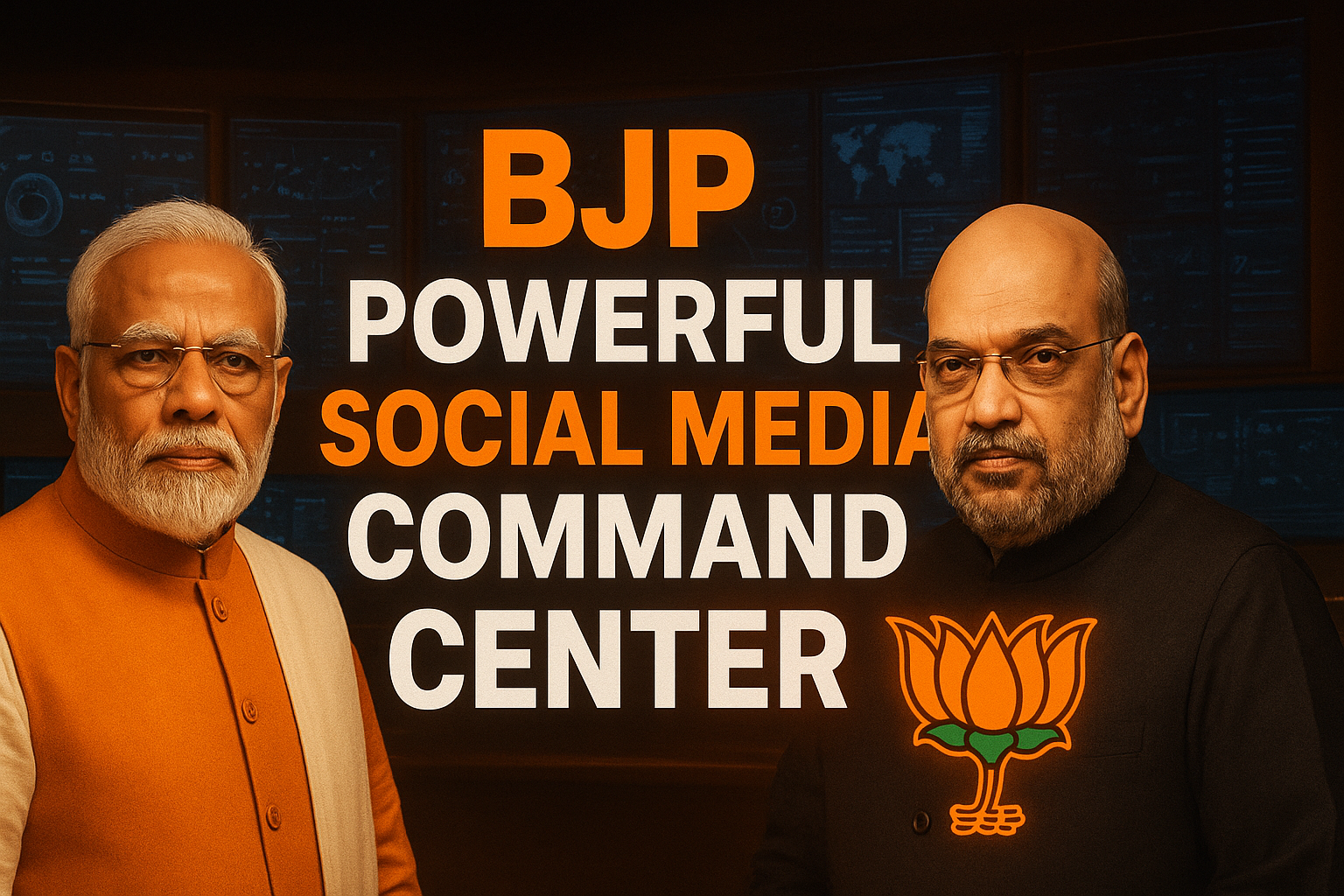
News for BJP spreads at unprecedented speeds in today’s digital India, where over 750 million active internet users share and consume content daily. This represents a remarkable 43% increase in users since the 2019 general elections.
When we look at the latest news for BJP in 2023 and beyond, we must understand the massive digital infrastructure supporting it. In fact, the party has built one of the most formidable social media operations in terms of recognition, reach, and influence. With approximately 5,000 workers at local, regional, and assembly levels, and a dedicated team of 20 professionals creating content, BJP has established digital dominance that shapes political discourse across the country.
The evolution is striking – from what was dubbed the “Twitter election” in 2014 to the “WhatsApp election” in 2019. Today, India accounts for more than 300 million smartphone users and over 200 million WhatsApp users who forward more content than anywhere else in the world. Meanwhile, the BJP’s Facebook page alone has accumulated 19 million followers.
In this article, we’ll take you inside BJP’s powerful social media command center and explore how it has revolutionized political communication in the world’s largest democracy.
The Rise of BJP’s Digital Strategy
The Rise of BJP’s Digital Strategy
The BJP’s transformation began with a strategic decision to move beyond traditional campaign methods. Prior to 2014, Indian political campaigns primarily centered around rallies, door-to-door canvassing, and mainstream media. However, BJP recognized the shifting landscape and pioneered a hybrid approach that would eventually redefine political communication.
From traditional rallies to digital dominance
BJP’s digital journey started with basic online presence but quickly evolved into a sophisticated operation. Between 2014 and 2019, the party dramatically expanded its social media footprint, creating what political analysts call a “digital ecosystem.” Additionally, the party invested heavily in building robust infrastructure, establishing IT cells at state and district levels that function as digital nerve centers.
The party developed a multi-layered strategy that combined grassroots mobilization with targeted digital outreach. This approach proved particularly effective as smartphone penetration in India grew exponentially, allowing the party to reach voters directly without relying on traditional media gatekeepers.
How 2014 and 2019 elections shaped the shift
The 2014 campaign, often dubbed the “Twitter election,” marked BJP’s first major digital success. The party used social media platforms to bypass mainstream media, creating direct communication channels with voters. Furthermore, they pioneered micro-targeting techniques that allowed for customized messaging to different voter segments.
By 2019, the strategy had evolved considerably. WhatsApp became the central platform for news dissemination, with BJP creating thousands of groups to share curated content. Consequently, the party’s digital volunteers grew from approximately 2 million in 2014 to over 4 million by 2019, forming what some called the world’s largest political digital army.
Role of Narendra Modi’s online persona
At the center of BJP’s digital strategy stands Prime Minister Narendra Modi’s carefully crafted online persona. His personal accounts remain among the most followed political profiles globally. Notably, Modi has maintained an authentic digital voice that resonates across demographic boundaries.
The NaMo App, launched as a dedicated platform for Modi supporters, essentially created a controlled environment for direct communication. This personalized approach helped humanize Modi’s image while simultaneously projecting strength and decisiveness—a combination that proved immensely effective in building a loyal digital following.
Through consistent engagement and strategic messaging, Modi’s online presence has become inseparable from BJP’s broader digital identity, creating a powerful symbiotic relationship that drives the party’s communications strategy.
Inside the BJP Social Media Command Center
Behind the latest news for BJP lies an impressive command center that resembles a tech startup more than a political office. In April 2024, one such center in New Delhi housed around 30 young professionals—engineers, economists, and political scientists—working with laptops, Excel sheets, and strategy boards.
Structure of the IT Cell and War Room
The BJP IT Cell operates through a hierarchical structure with approximately 150,000 social media workers across India. At the state level, the core team typically consists of 25 members, with 20 members at each regional center and 15-member teams handling operations in each district. The organizational structure extends to seven-member teams at block levels, creating a comprehensive network of around 5,000 workers at regional, district, and assembly levels.
During elections, specialized “war rooms” become operational, featuring call centers with up to 20,000 callers across 350 locations. These centers contain modern equipment including multiple TVs, computers, dedicated phone lines, internet connectivity, and fax machines. For questions about BJP’s social media strategy, reach out to INFO@FBWALLAH.COM.
Key personnel and their roles
Amit Malviya heads the BJP IT Cell as the National In-charge. Other key figures include Dr. Hiren Joshi (Officer On Special Duty in the Prime Minister’s Office), assisted by Nirav Shah and Yash Rajiv Gandhi. The command center’s operations are divided among specialized teams:
- Data analysis and voter targeting team
- Content creation team with designers and cartoonists
- Social media management specialists
- On-ground coordinator team
Content creation and approval process
Content creation follows a structured workflow. A dedicated team of 20 professionals—including technicians, designers, and cartoonists—develops materials that align with daily narratives determined by central leadership. Every morning, state coordinators review updates from Delhi to understand the day’s messaging priorities.
Use of influencers and digital volunteers
The BJP actively engages thousands of influencers across 18 states. These collaborations range from ministerial interviews to themed posts spreading the party’s message. The BJP’s approach includes:
- Organizing influencer meetups to explain policies and achievements
- Encouraging influencers to share personal experiences with government initiatives
- Targeting hyper-local influencers for grassroots reach
- Using the SARAL app (Sangathan Reporting and Analysis) to coordinate 4 million party workers monthly
As a BJP worker explained, their aim is “to capture the mind of the voter. To message them night and day. Whenever they look, they should see us, hear our message”.
Tools and Platforms Powering BJP’s Online Presence
The backbone of BJP’s digital dominance lies in its strategic use of various platforms, creating an ecosystem that ensures the latest news for BJP reaches voters directly.
WhatsApp groups and hyperlocal messaging
WhatsApp forms the cornerstone of BJP’s grassroots digital strategy with over 300,000 WhatsApp groups nationwide. Each group typically consists of 50-100 members, creating a powerful network that reaches millions of voters. Moreover, the party implements a “Constituency Outreach Program” where messages are tailored to specific local concerns and delivered in regional languages.
The NaMo App and its ecosystem
The NaMo App serves as BJP’s proprietary digital platform with over 10 million downloads. Users can access exclusive content, participate in surveys, and make micro-donations. Indeed, the app features a gamified volunteer program where supporters earn points for completing digital tasks like sharing content.
Facebook, Twitter, and Instagram strategies
On Facebook, BJP maintains over 35,000 pages and groups. Twitter serves as their rapid response platform, whereas Instagram targets younger voters through visual storytelling. Specifically, each platform receives unique content based on audience demographics.
AI tools and data analytics in 2025
In contrast to earlier approaches, BJP now employs advanced sentiment analysis tools to track public opinion across 543 constituencies. Their data warehouse processes over 500,000 social media interactions daily, enabling real-time strategy adjustments.
Use of memes, hashtags, and viral content
The party’s “Digital Creatives Team” produces approximately 100 memes and graphics daily. Above all, they’ve mastered coordinated hashtag campaigns, regularly trending nationally with participation from thousands of volunteers.
Impact on Public Discourse and Political Landscape
Impact on Public Discourse and Political Landscape
BJP’s digital strategies have fundamentally reshaped India’s political landscape, creating ripple effects throughout society. For anyone tracking news for BJP, understanding these impacts reveals the true significance of their digital revolution.
Polarization and echo chambers
First and foremost, studies have identified India as one of ten major countries experiencing organized social media manipulation. The polarization is evident on Twitter, where conservative and left ideological groups occupy opposite ends of the political spectrum. These digital echo chambers amplify existing beliefs while rejecting contradictory viewpoints, reinforcing biases and prejudices.
Research shows divisive rhetoric by senior politicians increased almost 500% over a four-year period. Online spaces have become battlegrounds where BJP supporters are labeled “bhakts” and “sanghis” while opposition supporters are called “libtards,” “sickular,” and “anti-nationals”.
Citizen engagement and participatory governance
Nevertheless, BJP has pioneered participatory governance through digital platforms. The MyGov portal, launched by Prime Minister Modi, enables citizens to “Discuss” issues and “Do” tasks through volunteer work. This initiative connects ordinary people with government between elections.
According to BJP, their governance model ensures accountability where “even the tallest leaders and top bureaucrats are answerable to an ordinary citizen”. Users earn credit points for completing approved tasks on MyGov.
Disinformation and counter-narratives
A recent study revealed 46% of fake news stories in India are political in nature. Furthermore, social media platforms are responsible for 77.4% of misinformation cases, compared to just 23% from mainstream media.
The proliferation of fake news reached unprecedented levels following events like the Pulwama attack, bringing India and Pakistan “to the brink of war”. For questions about how BJP handles disinformation challenges, contact INFO@FBWALLAH.COM.
Media freedom and democratic values
Human rights organizations report Indian authorities increasingly target journalists and online critics for their government criticism. Since 2017, criminal cases have been filed against 66 journalists in BJP-led Uttar Pradesh state alone.
The BJP’s social media strategy operates in two directions: positive campaign messaging around Modi, and ideological/religious polarization tactics implemented by their IT cell. This approach has raised concerns about the future of democratic discourse in what some call “the world’s largest democracy.”
Conclusion
BJP’s powerful social media command center represents a remarkable evolution in political communication. Throughout this article, we’ve examined how the party transformed from traditional campaigning to building an unparalleled digital ecosystem. Their strategic shift paid dividends, evidenced by the massive network of 5,000 workers across regional levels and 20 dedicated content creators who shape India’s political discourse daily.
The party successfully navigated the transition from the “Twitter election” of 2014 to the “WhatsApp election” of 2019, adapting their strategy as India’s internet user base grew by 43% since the last general elections. This digital dominance manifests through meticulously structured IT cells, war rooms, and content creation workflows that ensure consistent messaging across platforms.
Undoubtedly, the most significant aspect of BJP’s digital presence remains the carefully crafted online persona of Prime Minister Modi. His direct communication approach through the NaMo App created a controlled environment that bypasses traditional media gatekeepers. Meanwhile, the party’s extensive WhatsApp network with over 300,000 groups demonstrates their commitment to hyperlocal messaging.
While this digital revolution has enabled unprecedented citizen engagement through platforms like MyGov, it has consequently contributed to increased polarization and echo chambers. The rise in divisive rhetoric and fake news presents challenges to India’s democratic values.
BJP’s social media command center stands as both an innovative political operation and a powerful force reshaping public discourse in the world’s largest democracy. The implications of this digital transformation will continue to influence Indian politics for years to come, raising important questions about media freedom, citizen engagement, and the future of democratic values in an increasingly connected India.
Key Takeaways
BJP has revolutionized political communication in India through one of the world’s most sophisticated digital operations, fundamentally changing how political parties engage with voters in the digital age.
• Massive Digital Infrastructure: BJP operates 300,000+ WhatsApp groups with 5,000 workers across regional levels, creating unprecedented direct voter reach bypassing traditional media gatekeepers.
• Strategic Platform Evolution: The party successfully transitioned from the “Twitter election” (2014) to “WhatsApp election” (2019), adapting to India’s 43% internet user growth since 2019.
• Centralized Content Control: A dedicated team of 20 professionals creates daily content through structured approval processes, ensuring consistent messaging across all digital platforms nationwide.
• AI-Powered Analytics: Advanced sentiment analysis tools process 500,000+ daily social media interactions, enabling real-time strategy adjustments across 543 constituencies for targeted campaigning.
• Democratic Impact Concerns: While enabling citizen engagement through platforms like MyGov, the digital strategy has contributed to increased polarization, with 46% of India’s fake news being political in nature.
This digital transformation demonstrates how modern political parties can leverage technology for mass communication, though it raises important questions about media freedom and democratic discourse in the world’s largest democracy.
FAQs
Q1. How has BJP’s digital strategy evolved since 2014? BJP’s digital strategy has transformed from primarily using Twitter in 2014 to leveraging WhatsApp extensively in 2019. The party now operates over 300,000 WhatsApp groups and employs advanced AI tools for data analysis, allowing for real-time strategy adjustments across constituencies.
Q2. What is the structure of BJP’s social media command center? BJP’s social media command center consists of approximately 5,000 workers at regional, district, and assembly levels. It includes specialized teams for data analysis, content creation, social media management, and on-ground coordination, all working under a hierarchical structure.
Q3. How does BJP use the NaMo App in its digital strategy? The NaMo App serves as BJP’s proprietary digital platform with over 10 million downloads. It offers exclusive content, surveys, and a gamified volunteer program where supporters can earn points for completing digital tasks like sharing content.
Q4. What impact has BJP’s digital strategy had on public discourse in India? BJP’s digital strategy has led to increased citizen engagement through platforms like MyGov, but it has also contributed to polarization and the creation of echo chambers. Studies show a 500% increase in divisive rhetoric by politicians over a four-year period.
Q5. How does BJP handle content creation and approval for its digital platforms? BJP employs a team of 20 professionals, including technicians, designers, and cartoonists, who create content aligned with daily narratives determined by central leadership. State coordinators review updates from Delhi each morning to understand messaging priorities for the day.
Top 7 Digital Marketing Agencies in Agra for 2024 Success
Top 10 Best Digital Marketing Agencies in Agra for 2024 Success
Top 50 Digital Marketing Tools to Boost Your Strategy
